May 28, 2011

On the Lamb: Harissa-Rubbed Lamb Chops with Charmoula


As a part-time food blogger and full time food freak, my antenna is always up for delicious things to make, eat and blog about. More and more, I’m cooking and posting original recipes that I’ve either perfected or – through pure blind luck and some modicum of skill – managed to create from the season’s best.

But sometimes, the clamour for a recipe outweighs my desire to be original. And that clamour was resounding last week when I made Bonnie Stern’s amazing Harissa-Rubbed Lamb Chops with Charmoula, from her wonderful Friday Night Dinners cookbook. With a houseful of people – 14 to be exact – all of them passionate about great food and wine, we wanted to serve something that was foolproof fabulous. And while our Butter Crunch Salad, Quinoa with Dried Cherries, and Rosemary-Roasted Salmon were all hits, the star of the show was the finger-licking good, garlicky, sweet-and-spicy chops. Easy, beautiful and tasty – a triumvirate that you can’t beat.

Harissa-Rubbed Lamb Chops with Charmoula
serves 10 to 12

For maximum flavour, we marinate the lamb a day ahead and refrigerate, and make the charmoula a day ahead too. We sear the lamb the next morning, and refrigerate until ready to cook and serve. So all that needs to be done for dinner is finish cooking the lamb.

You can also freeze the rack of lamb after searing. Just defrost, make the charmoula and finish off the lamb. We did just that last night, and had a ready-made Friday night dinner of our own in 30 minutes flat.

For the harissa:
½ c olive oil
4 cloves garlic, minced
1 tbsp smoked paprika (seek it out – the distinct flavour can’t be replicated with just regular paprika)
1 tbsp ground cumin
2 tsp kosher salt
1 tsp cayenne or hot pepper sauce
4 racks of lamb

For the charmoula:
1 c olive oil mayonnaise
2 cloves garlic, minced
1 tbsp lemon juice
1 tsp hot red pepper sauce
½ tsp ground cumin
1 tbsp smoked paprika
2 tbsp finely chopped fresh cilantro

1.  Make the harissa by combining all of the wet and dry ingredients in small bowl. Rub every last bit into the lamb. If making immediately, leave on the counter; if holding to cook later, place in a casserole dish, cover and refrigerate (overnight if desired).

2. Make the charmoula by combining all ingredients in a small bowl. Refrigerate until ready to use, bringing to room temperature before serving.


3. If finishing the dish immediately, preheat the oven to 400°F. In a large roasting pan over medium high heat, sear the lamb racks, meaty side down, until browned. Transfer the racks to lined rimmed baking sheet, bone side down, and roast for 20 to 25 minutes for medium rare. Alternatively, grill the racks on a gas or charcoal babecue to enhance the smoky flavour.

4. Slice the lamb into chops, place on a platter, and serve with the charmoula on the side.


May 17, 2011

In Season: Orrechiette with Fiddleheads, Wild Ramps and Spot Prawns


Although it's been wet, rainy and just too darn cold for spring to feel like it's really here, it hasn't stopped all the beautiful green things from breaking ground. At last week's farmers' market, amongst the cold cellar apples and farm fresh eggs, there was spring bounty to be had: asparagus big and fat and firm, sandy ends still damp; fiddlehead ferns, tightly coiled and emerald green; and that most fleeting and prized of spring greens: wild ramps, the leek's kissing cousin.

Like all things fresh and green, simple is best: a steam, a sauté, the earthy flavours enhanced and set off by doing less with more. For a rainy and chilly Saturday night dinner, nothing could be simpler than this pasta dish: hearty enough to stave off the cold and made deliciously seasonal with those wonderful greens. But hurry…summer is almost here, and those wild green things that are spring’s harbingers will once again disappear.

Orrechiette with Fiddleheads, Wild Ramps and Spot Prawns
serves two

When I was searching for a recipe to use my greens, a quick internet search led me to one of my favourite blogs: Marc Matsumoto’s No Recipes, with fabulous simple-to-make recipes and even better photography. His take on this pasta dish calls for lots of freshly grated cheese. Instead, I chose to use wild spot prawns and give the dish a bright briny flavour, perfect to complement the deep green of fiddleheads and wild ramps, and added some of my house cured pancetta for extra complexity.

1 c fiddleheads, cleaned thoroughly
8 oz orecchiette pasta
1 tsp extra virgin olive oil, plus 1 tbsp
2  oz fresh pancetta, diced
½ lb. wild ramps, white and pink parts only, chopped
10 spot prawns, shelled and deveined
½-1 cup good quality tomato sauce (the thicker the sauce, the less you should use)

Be sure to seek out distinctive - and distinctively flavoured - spot prawns for a real taste of the sea.  We get ours from Fisherfolk

1.  Rinse fiddleheads thoroughly in cold water and trim any brown ends.  In a medium pot, steam until tender-crisp, about 8-10 minutes. Rinse in cold water and set aside.


2.  While fiddleheads are cooking, begin cooking pasta according to pasta directions, until just al dente. Drain and reserve 1 cup of cooking liquid.  Stir a tsp of olive oil through pasta to keep from sticking, and set aside.

3.  Heat oil over medium heat in a medium pot and sauté pancetta until lightly browned.  Add the wild ramps and sauté for two minutes.  Add the fiddleheads and the prawns, and cook until the prawns are just cooked through and opaque. 

Reserve the leafy green tops for your morning omelette

4.  Add the pasta and tomato sauce, and stir to combine, adding some of the cooking water if needed to ensure the pasta is evenly coated with sauce.  The sauce is meant to complement, not overwhelm, the dish.  Serve in two shallow heated bowls with a crisp cold Riesling. 

May 02, 2011

Just Ducky - Duck Prosciutto and Rapini Crostini with Buratta


My niece is a declared vegetarian. Starting first with meat, and not much of a seafood eater, it’s been a process of food group elimination, driven as much, if not more, by personal taste as by philosophy. Things got complicated when, at 13, she expressed an interest in a career as a chef, as she knew that going through culinary school would be well nigh impossible without eating – or at least tasting – meat.

While the culinary career has long been abandoned in the pursuit of a business degree (captains of industry being much more likely to make millions than a chef), I think I’ve always known that someday, meat would make a comeback in her diet. But even I wasn’t prepared for her casual announcement one day that, indeed, she had started eating meat again. Specifically salume and prosciutto. But, she was quick to assure me, she was still a vegetarian otherwise.

As I continue my adventures in meat curing via Charcutepalooza this year, I offer up this dish in honour of my not-quite-a-vegetarian niece. I don’t know that a steak is on her horizon any time soon, but I’ll gladly sit down to a meal of charcuterie with her any time.

Duck Prosciutto and Rapini Crostini with Burrata

This duck prosciutto was the first Charcutepalooza challenge, and was what convinced me that there wasn’t any great mystery to curing meats other than patience, lots of salt and a trusted guide. The guide comes in the form of Michael Ruhlman’s Charcuterie. And while you’ll have to buy the book to find out how to make the prosciutto (or take the easy route and just buy some readymade), I’ll gladly share my crostini recipe with you here.

1 bunch rapini (broccoli rabe), trimmed, washed and chopped
1 large clove garlic
¼ c chicken stock or water
I tbsp olive oil, plus ½ cup
1 small French baguette
8 oz ounces duck prosciutto, thinly sliced
1 lb burrata cheese
Maldon or other finishing salt

1. Heat 1 tbsp olive oil over medium high heat in a medium non stick skillet. Mince garlic sauté quickly in oil; be careful not to brown. Add rapini, chicken stock or water; lower heat to medium, cover and saute until rapini is tender-crisp. Remove from heat, drain any remaining liquid and set aside.


2. Slice baguette on the diagonal into ½ inch slices, brush each slide with olive and grilled or broil until lightly browned. Set aside.


3. Using a serrated knife, slice the burrata cheese into thick slices and set aside.

4. Place a generous tablespoon or two of sautéed rapini on each baguette piece. Place a couple of slices of duck prosciutto on top of the rapini, add a slice of burrata and finish with a generous pinch of Maldon salt.


April 02, 2011

Toronto Bakes for Japan - Spread the Word!


Thanks to the fabulous work of Heena and Niya at Tiffin Tales, the entire city is banding together to bake and raise funds for Japan in the aftermath of the terrible tsunami.

I'll be participating on April 10 by baking up a storm of mini fennel-olive oil bread loaves to sell. You can participate too - even if it's by buying some of the delicious products that will be available for sale at five locations across the city.

Read more here and help out if you can.

March 08, 2011

Salad Days: Spanish Green Salad with Tuna and Beans

I dream about having the perfect pantry. One that produces, as if by magic, exactly the right ingredient when I need it. Walnut oil, say, or canned escargots. Clam juice, hearts of palm, Picholine olives. That je ne sais quoi needed to finish a dish, add an unexpected touch, make a dish genius instead of just good.

And then I make something simple for dinner, with every ingredient on hand, and the can opener close by. Really good quality canned tuna. Mixed beans. Sherry vinegar and excellent olive oil. A blend of greens. Finishing salt and lots of freshly ground black pepper. In any sort of combination, this rustic and simple salad is a reminder that the basics in your pantry really can combine to make a perfect dish. And that, my friends, is genius.

Spanish Green Salad with Tuna and Beans
serves one very generously for dinner, or two if you add good crusty bread and butter and lots of crisp white wine

Why Spanish?  While this type of salad can be typically be found in Italy, I've given it a twist en Espanol by using Ortiz tuna, Spanish sherry vinegar and Spanish olive oil.  The tuna is premium, and hard to find here; I bought this 250 gr can in London for the equivalent of $9.66.  It's line caught, packed in olive oil and worth seeking out.

According to a Spanish proverb, four people are needed to make a good salad: a spendthrift for oil, a miser for vinegar, a counsellor for salt, and a madman to stir all up

4-6 cups mixed greens: a combination of sturdy crunchy greens like romaine hearts and spicy soft greens, like baby arugula
1 250-gram can of tuna packed in olive oil
½ c mixed beans
Sherry vinegar and olive oil to taste
Plenty of freshly ground black pepper
Maldon salt, or other large and flaky finishing salt

1. I a large bowl, tear romaine leaves into bite size pieces. Add a couple of handfuls of arugula. You can also add a small amount of micro-greens: I used super-healthy micro broccoli greens. Toss to combine.

The layering effect of coarse to micro is very pretty

2. Drain the tuna and add to the salad, breaking any bigger chunks into smaller pieces as you do. Top with the beans. Add the vinegar and olive oil to taste, and finish with a generous sprinkling of pepper. Toss to combine.

3.  Divide between two plates, season generously with salt and serve.

February 22, 2011

The Pig and I: Pancetta Cups with Duck Eggs for Charcutepalooza

I guess you could say my relationship with the venerable pig began when I was kid. I can’t remember exactly how old I was when I saw my first dead pig, but I can say with certainty where it was: in our basement. Every year, my father would buy a pig, sharing the cost with several friends. Without warning, there it would be: hanging in the basement, mute and huge and, well, dead.

Funny about that – while I can remember those pigs, and the very first time I dared to touch one, I can’t ever remember being afraid or repulsed. I knew, even back then, that the pig would yield all manner of good things. And because it was there, in the house, it seemed normal; just another thing that my parents did, like making bushels of tomatoes into sauce, ravioli by hand, or batch after batch of pannetone, the golden loaves filling the small kitchen table. Didn’t every family butcher their own pig?

The ritual was the same. The long trestle table would come out, and the men would gather in the basement, working throughout the day to butcher the pig and divide the spoils. Our wine cellar, dank and dark and smelling of earth, would be the beneficiary of the day’s work. Hanging over the demijohns where we were sent to get the evening’s bottle of wine were the sausages and the salamis. Into the freezer went the pork chops and ribs. I don’t exactly know where we kept the musetto, that peculiarly Italian squat sausage that my mother would cook in hearty minestrone thick with beans, but I do know that I miss the taste of it still.

My father, preparing charcoal for an impromptu barbecue in the park

Of course, I didn’t exactly hang around for the butchering part. But the space of years and distance and parents long gone makes me yearn for a time machine, one that could bring me back to that basement, those days, that ritual.

Fast forward to today, where I still revere the pig and all its glorious parts, never really thinking about making more than a roast or ribs. And then I read about Charcutepalooza. Cue the angels singing and the clouds parting. Could I, would I dare myself to make my own prosciutto, pancetta and bacon? Damn right I would!

Late to the game, I’ve been furiously salting duck breasts and pork belly. The extra fridge in the basement has been divested of its bottles of wine and turned into a curing spot. Cheesecloth and butcher twine bought, curing salt procured, jubilation abounding.

And finally, my first Charcutepalooza post, featuring duck eggs cooked in pancetta cups with mushrooms, parsley and cheese. Never has a dish tasted more satisfying, or connected me more to my heritage. My father would be proud.

For this Charcutepalooza challenge, I chose to make the pancetta.  The pork belly, from Cumbrae's, was one gorgeous piece of pig.


Richard was away, so rolling the belly solo was impossible. Here's the belly after curing for seven days, wrapped and hung flat

Beautiful marbling for my first pancetta attempt!

Duck Eggs in Pancetta Cups with Porcini Mushrooms and Cheese
serves two or four

These little eggs cups can either form the main course of breakfast meal or be a mini side dish for a brunch.  Serve two per person if they are the main event.  They're baked in steps, to allow each element of the dish to cook to perfection.

½ lb piece pancetta (not sliced)
3  oz dried porcini mushrooms
1 small garlic clove, minced
2 tbsp chopped parsley, divided
½  tbsp each unsalted butter and olive oil
Sea salt and freshly ground pepper
4 duck or chicken eggs
2 oz hard goat cheese, cut into thin 2 " strips

1.  Preheat oven to 400°F, with the rack in the middle position.

2.  Reconstitute the mushrooms in 2 c boiling water for 20 minutes. 

3.  While the mushrooms are reconstituting, slice the pancetta into 4 ⅛-inch x 4-inch strips.  Grease 4 of the cups in a regular muffin tin, and line them with the pancetta, around the sides and the bottom.  Set aside.  Separate the eggs, being careful not to break the yolks.  Set the yolks aside in their shells, and put the egg whites in a pourable measuring cup.

4. When the mushrooms are ready, drain, rinse and chop finely.  Heat the butter and oil over medium heat in a small skillet, and when the foam subsides, add the garlic.  Sauté, stirring, for a minute and then add the mushrooms and one tbsp of parsley.  Continue sautéingstirring, until the ingredients meld and are fragrant, about two minutes more.

5.  Add a generous tablespoon of the porcini mixture to each cup.  Divide the egg whites between the cups.  Place the muffin tin in the oven and bake for 10-12 minutes, or until the egg whites are just set.*  Take the tin out of the oven, top each cup with an egg yolk and put back in the oven, baking a further 2 minutes. 
 
*Duck egg whites are particularly unctuous and take longer to cook.  If you are using regular eggs, you may want to bake the pancetta cups for five minutes first, and then add the mushrooms and egg whites and shorten the baking time for the egg whites.  The important thing is to allow the various layers to cook thoroughly without overcooking the eggs.


6.  Take the tray out, top with the cheese, and broil for 5 minutes, or until the cheese is melted and bubbly.  Sprinkle the remaining parsley on top of each cup.
 
7.  To serve, scoop the cups out carefully with spoon and place one or two of the cups on a serving plate.  Serve with hot buttered toast to dip into the egg yolk, which will be creamy and thick.
 

February 18, 2011

Something Fishy: Halibut with Meyer Lemon, Olives and Fennel

It’s a funny thing about seasonality. We tend to associate that with the abundance of summer and fall, when Nature spoils us with an
embarrassment of riches. Winter is a crueler time, stoic and practically begging for the hearty dishes that fill and nourish us. But even now there's a seasonality uniquely of the moment that makes lighter dishes and tastes possible and welcome.

I’m thinking about Meyer lemons a lot these days. I hope they won’t become a year round thing; foods should be savoured for their fleeting appearance, valued because they are that much more uncommon. And there’s something about these sunny lemons that makes me think of the Mediterranean: of lazy afternoons, warmth and indolence. I'm thinking of myself sitting at a café table for one, the mysterious woman with the fabulous hat and Jackie O shades, delicately eating a light and tasty fish dish that’s drenched with lemons, olives, fennel. I’m thinking I just might make this for dinner again tonight.

Halibut with Lemon, Olives and Fennel
serves two

1 lb halibut fillet
2 Meyer lemons, thinly sliced
1 fennel bulb, trimmed and thinly sliced, fronds reserved*
½ to ¾ c assorted good quality Mediterranean olives
2½ c olive oil
Fine sea salt and freshly ground pepper to taste
A good finishing salt, such as Maldon (optional)

Poaching firm fleshed fish in olive oil and cooking in a low heat oven is a wonderful way to prepare halibut. Surprising, the oil doesn’t absorb into the fish at all.

1. Preheat the oven to 250F°. Rinse and pat the fish dry and season with salt and pepper. Use a light hand with the salt; the olives will add to the dish's saltiness. Set aside.

2. Line a shallow glass baking dish with fennel fronds. Top with a layer of the lemons and then a layer of fennel slices. Place the fish on top.

You can't have too many fronds at the bottom of the dish; supplement with the celery-like stalks in a pinch

3. Sprinkle the olives on top and around the fish. Add another layer of lemons and fennel slices. Carefully pour the olive oil into the dish until the fish is almost completely submerged.

Don't worry about the olive brine getting into the dish

Note the the oil is not covering the lemons and fennel, but is covering the fish

4. Bake in the middle rack of the oven for one hour, or until the fish is flaky. To serve, remove the fish from the dish with a slotted spoon and divide amongst two plates. Garnish with the lemon and fennel slices and the olives.  Add a pinch of Maldon salt to finish the dish, if desired.  Just be careful about the overall saltiness of the dish.

5. Pour a glass of Alsatian Pinot Gris, don your most fabulous hat and dream of the Mediterranean while you eat.

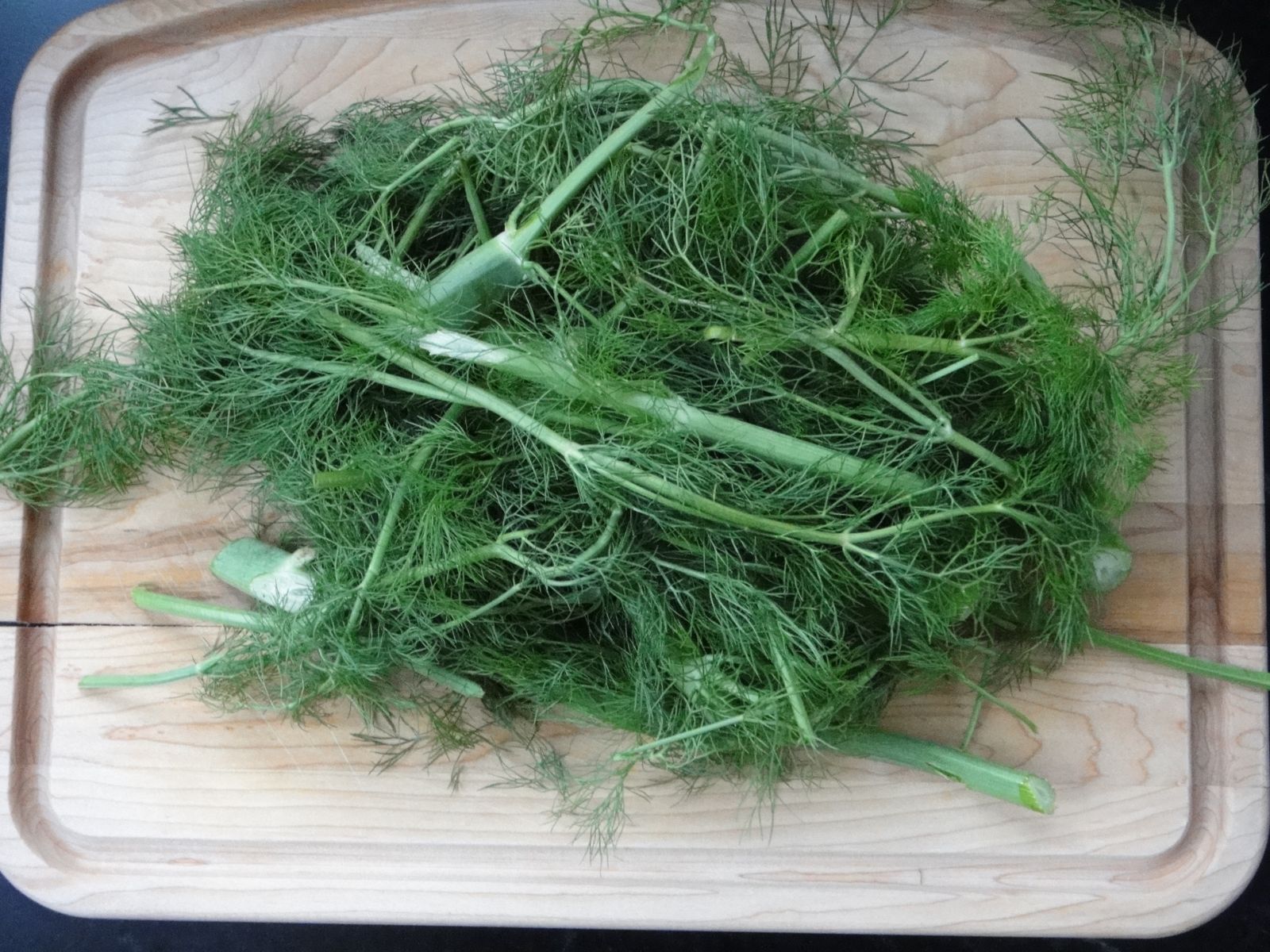
*Regarding fennel fronds. I got lucky when I went to Fiesta Farms for the fennel; Serge in produce was just trimming a big crate of fennel for restocking. If you can sweetly wheedle a bag of the discarded frond tops, they make an excellent lining for fish dishes, as I've used them here, or to stuff into whole salmon. If you really want to capitalise on an unexpected bounty of fronds, mince and measure the feathery greens into three tbsp portions and freeze in little baggies to have ready to make Fennel-Olive Oil Quick Bread.
February 12, 2011

Now I'm Stylin': The Stylish Blogger Award

A few days ago laxsupermom from Sugar n Spice in the land of Balls n Sticks nominated my blog for a “Stylish Blogger Award”.   It was only when I started reading about other SBA nominees that I realized this wasn’t just a nice way of saying “I like your blog”. When I accept the award, I need to tell you seven things about myself, give the award to 15 other fab blogs (and bloggers) that I love, and a shout out to the person who nominated me.

So, first, thank you laxSM, for your nice nomination!

And without further ado, here are seven random things about me.

1. I have (ahem) a bit of a shoe weakness
Sadly these are not my shoes but a girl can dream

2. And can generally find something to buy even if I’m in the middle of nowhere – I *love* to shop
Who do you suppose shops at this Prada store?

3. We don’t own a TV
Contemporary Tv Stand
When we get one I want it to be MASSIVE

4. But I still manage to be addicted to Glee
glee season 1
Sue Sylvester rocks; or at least that's how I "c" it

5. I collect cookbooks - obsessively
How many is too many, really?

6. And a couple of my recipes have appeared in a best-selling cookbook

If you don't own this cookbook, you should

7. Did I mention I like food?
...but you knew that already

There are so many fabulous blogs out there, it’s hard to choose just 15 to highlight. So here’s a random list of food blogs that make my mouth water, make me laugh, or just plain entertain me. I hope you visit them and enjoy them too.