May 23, 2010

Farmers' Market Find - Fresh Duck Eggs

There's always a treasure trove of wonderful food at the market - in season now are ramps, fiddlehead ferns, asparagus, fava beans. Seeing all those delicious greens reminds us that summer is practically here. 


But don’t forget to look for something new in the basics too. I first tried duck eggs last spring and was immediately hooked. It starts with the eggs themselves – beautiful mottled colours, all slightly different in size and shape, each egg looking as if it were cast of marble. These are eggs harvested by hand, not sorted by a machine.


The real prize is inside. While the eggs are virtually the same size as chicken eggs, the yolks are bigger and a deeper hue of yellow, the white pristine white. Use them for everything that you would normally use eggs for, but to appreciate the real “egginess” of them, make a couple sunny side up in a pan, served alongside freshly toasted bread. It will make your weekend a better thing.


May 14, 2010

May Daring Cooks Challenge: Stacked Green Chile & Grilled Chicken Enchiladas with Green Chile Sauce


After recently cooking Mexican food for the first time from The Tortilla Book, I was excited to try this month's "Cinco di Mayo" inspired Daring Cooks Challenge.

Barbara of Barbara Bakes and Bunnee of Anna+Food chose a delicious Stacked Green Chile & Grilled Chicken Enchilada recipe in honour of Cinco de Mayo.  The recipe, featuring a homemade enchilada sauce, was found on Fine Cooking and written by Robb Walsh.

Stacked Green Chile & Grilled Chicken Enchiladas with Green Chile Sauce
serves four

For Green Chile Sauce:
1½ lb. fresh Anaheim or poblano chiles (about eight 6 to 8 inch chiles)
Vegetable oil
8 oz. tomatillos (about 4-5 medium), stems removed
4 c. chicken broth
1 tbsp minced shallots
1 tsp dried oregano
1 clove garlic, minced
½ tsp kosher salt (add more to taste)
¼ tsp black pepper (add more to taste)
2 tbsp cornstarch, dissolved in 2 tbsp water
Dash hot sauce, your favorite, optional

For enchiladas:
5 or 6 bone-in chicken thighs, skin removed
3 tbsp olive oil
Kosher salt and pepper
12 small corn tortillas, 5-6 inch diameter
6 oz grated Monterey Jack cheese
Cilantro for garnish, chopped and sprinkled (optional)

Green Chile Sauce

yields about 4 c.

1. Coat each chile with a little vegetable oil. Lay the oiled chiles on the grill or lined baking sheet. Place the grill or broil close to the element, turning the chiles so they char evenly. They should be black and blistered.  As they char, remove them to a bowl and cover with plastic wrap. Let them rest until they are cool.
Spraying the foil with non-stick spray prevents the peppers from sticking

2. Gently pull on the stem to remove the seed core.  Peel away as much skin as possible, cut the chile in half and scrape out any remaining seeds.  Cut chiles into strips and chop roughly.  Set aside.


3. Put a medium saucepan of water on to boil and remove the papery outer skin from the tomatillos. Boil the tomatillos until soft, 5 to 10 minutes. You can also grill the tomatillos until soft.*

*I grilled the tomatillos and the chicken for the enchiladas at the same time that the chiles were roasting in the oven.  Multitasking at its best!


4. Cool tomatillos and  puree in a blender or food processor.  Put the pureed tomatillos in a medium saucepan along with the chicken broth, chopped green chiles, minced shallots, oregano, garlic, salt and pepper.


5. Bring to a boil over medium-high heat and then reduce the heat and simmer for 10 minutes.  Add the cornstarch/water mixture and stir well. Simmer, stirring occasionally, until the sauce is thickened and reduced to 4-5 cups, another 10-15 minutes.


6. Adjust seasonings and add hot sauce if you want a little more heat.

Stacked Green Chile and Grilled Chicken Enchiladas

1. Heat a gas grill to medium high or build a medium-hot charcoal.  Coat the chicken with olive oil and season well with salt and pepper. Preheat oven to 450 degrees.

2. Grill the chicken until just cooked through.  Cool and then slice into thin strips or shred.


3. In a small skillet, heat 3 tablespoons oil over medium-high heat until very hot. Dip the edge of a tortilla into the oil to check – it should sizzle immediately.

4.  Using tongs, put a tortilla into the pan and cook until soft and lightly brown on each side, about 15-20 seconds per side (at the most).  Drain on paper towels.  Add oil as needed and continue until all 12 tortillas are done.

5.  In a baking dish large enough to hold four separate stacks of tortillas, ladle a thin layer of sauce.  Lay four tortillas in the dish and ladle another ½ cup of sauce over the tortillas.


6.  Divide half the chicken among the first layer of tortillas, top with another ½ cup of sauce and 1/3 of the grated cheese.  Stack another four tortillas, top with the rest of the chicken, more sauce and another third of the cheese.  Finish with the third tortilla, topped with the remaining sauce and cheese.


 7.  Bake until the sauce has thickened and the cheese melted, about 20 minutes. Let rest for 5-10 minutes.

8.  To serve, transfer each stack to a plate. Spoon any leftover sauce over the stacks and sprinkle with cilantro, if you wish. The stacks may also be cooked in individual gratin dishes.

May 09, 2010

Italy in a Dish: Peperoni all Siciliana

There are certain dishes that capture the essence of a place in one single bite. This amazing dish is Italy: flavourful, versatile and with a very few good quality ingredients. The slow cooking brings out and melds the Mediterranean flavours to perfection. This dish keeps beautifully for several days in the fridge.

I try to grill a whole bushel of red peppers in the fall and freeze them in small packets, to have ready whenever I need grilled peppers. If you use jarred or canned grilled peppers, take into account that the peppers tend to be much softer. You may need to adjust cooking times accordingly, and the results will not be as spectacular.

Peperoni alla Siciliana
adapted from Good Tempered Food by Tamasin Day-Lewis

Serves 4-6 as an appetiser, or use it alongside your favourite grilled meats or robust fish dishes.  Better yet, make it the star of an antipasti spread, with salumi, Italian cheese and olives alongside crusty bread and a great Chianti.

5 red peppers
1 onion, finely sliced
2 cloves garlic, chopped
2 tbsp olive oil
2 tbsp water
1 small vegetable bouillon cube, dissolved in 2 tbsp good quality balsamic vinegar
Small bunch fresh oregano, stems removed, chopped
24 small glossy black olives (Ligurian if you can find them)
2 anchovy fillets (packed in olive oil)
2 tbsp capers, rinsed

1. Grill or char the red peppers. Preheat the broiler. Line a broiler pan with tin foil that been sprayed with non stick spray (or lightly coated with olive oil). Halve the peppers lengthwise, remove the seeds, and broil 3 inches from the heat, turning with tongs once the first side is charred and blackened. Put the charred peppers in a bowl, cover tightly with plastic wrap and let them cool. Peel the skins, and cut the peppers into long strips.

(Alternatively, you can put peppers on their sides on the gas burners of your cooktop, and turn flames on moderately high. Roast, turning frequently with tongs, until skins are blackened, 5 to 8 minutes. Proceed as above).

2. Cook the onion, garlic and olive oil gently in a covered pan, with a pinch of salt and the water. Stir occasionally and cook until the onion is softened to a puree. Remove the lid and continue cooking until the onion is golden. This step will take about 40-50 minutes in total.


3. Add the peppers, the bouillon cube and balsamic vinegar, and cook for a further 30 minutes, stirring occasionally.


4. Add the remaining ingredients and cook for an additional 20 minutes at very low heat.

Salt cured anchovies are preferred by some.  If you use anchovies in olive oil, try to find Ortiz brand anchovies (I haven't been able to find them here in Toronto)


Oregano is a perennial herb, so if you have a sunny spot in the garden, grow some! 


5. Serve warm or at room temperature, with grilled or crusty bread to soak up the delicious flavours.


May 07, 2010

Local Flavours: Pizzeria Libretto

Italy is never far from my heart - or my stomach.  I had an amazing Italian mamma with a sleight of hand and no recipe in sight.  Gnocchi, lasagna, cabbage rolls (a nod to her Istrian ancestry), muzzeto, polenta - she made it all effortlessly and we ate it thoughtlessly, thinking that everyone ate the same way.  A favourite was her weekend pizza, the dough slightly thick and chewy, homemade tomato sauce adding a delicious sweetness. 

It wasn't until years later, on my first trip to Italy, that I discovered another kind of pizza - the thin crackly crusted variety a la Napoli.  It wasn't long before wood burning pizza seemed to make an appearance everywhere that a wood-burning oven could be squeezed into a restaurant corner, most famously at Spago in Beverly Hills. 

Like any transplanted dish, the further the distance, the greater the risk of loss of authenticity.  That's why I love Pizzeria Libretto.  Chef Rocco Agostino and proprietor Max Rimaldi are committed to creating a truly genuine pizza of Neapolitan proportions.  That commitment meant an investment in a 5000lb. oven shipped from Italy, and made by a third generation oven maker from Naples.  It's a thing of beauty: the opening quite small to preserve heat, continually fed by wood to maintain the 900 degree heat required to make a beautiful pizza in 90 seconds.  
The real deal

The wood not only feeds the oven; it adds a warm and rustic touch to the restaurant
 
While the menu is primarily focused on pizza, there is a carefully edited selection of antipasti, including amazing warm olives, and a salumi menu offering fare from local chefs. 
 
Pizza is the star of the show at Libretto
 
I can remember the first time I had pizza with fresh greens on top.  It was at a roadside osteria in Italy, where my cousins and our family had stopped after a day in the mountains.  I remember thinking how absolutely fantastic that the mix of fresh and baked was, and Pizzeria Libretto's version does Italy proud.
 
Whipping up one of dozens of pizzas that will consumed by hungry and happy patrons
 The Ontario Prosciutto & Arugula: tomato, garlic, oregano, basil, and shaved Parmigiano Reggiano

Buon Appetito!

Pizzeria Libretto
Toronto, Ontario
(416) 532-800

Open daily from 12 noon to 11 pm
No reservations
mailto:info@pizzerialibretto.com

May 05, 2010

Comfort in a Bowl: Yummy Split Pea and Ham Soup

With all of the delicious spring veggies starting to arrive at the market - fava beans, local asparagus, fiddleheads - there's time for one last bowl of hearty soup before warmer weather arrives.  Richard is the soup maker in the family, and this favourite has been one of his staples for years now.  Be sure to always save the ham bone when you buy a holiday ham (they can be frozen), or used smoked pork hocks, as Richard did for the first time, with equally yummy results.

Split Pea and Ham Soup
adapted from The New Basics by Julee Rosso and Sheila Lukins
serves six, and guaranteed to solicit second helpings so plan accordingly!

1 pound dried green split peas
5 cups low sodium chicken broth
3 cups water
1 meaty ham bone, or 2 smoked ham hocks
2 ribs celery, leaves included, diced
3 tablespoons chopped fresh Italian (flat-leaf) parsley, divided
1 tbsp chopped fresh tarragon leaves
1 tbsp olive oil
1 cup diced peeled carrots
1 cup diced onion
1 leek (white part only), rinsed and sliced
1 cup slivered fresh spinach leaves
2 tablespoons dry sherry
1/2 teaspoon freshly ground black pepper

1. Rinse the split peas in a strainer, and then combine them with the stock and water in a large soup pot. Bring to a boil.

2. Add the ham bone or hocks, celery, 1 tablespoon of the parsley, and the tarragon. Reduce the heat to medium-low and simmer, partially covered, stirring occasionally, for 45 minutes.

3. Heat the olive oil in a saucepan over medium-low heat. Add the carrots, onion, and leek. Cook until the vegetables are wilted, 10 minutes. Add them to the soup pot, along with the spinach. Simmer, partially covered, 30 minutes. You may need to add more water or stock.


4. Remove the soup from the heat. Remove the ham bone or hocks, and shred the meat from the bone, removing any excess fat. Return the meat to the soup.


5. Add the sherry, pepper, and remaining 2 tablespoons parsley. Heat through, and serve immediately.


May 02, 2010

Please Pass the Butter - Fennel-Olive Oil Quick Bread

Nothing says thank you quite like a homemade hostess gift - something delicious from the kitchen. When the hostess in question also happens to be a famous cookbook author and teacher, the stakes are pretty high. So when Bonnie Stern invited us to a Friday night dinner, it seemed only fitting to bring a loaf of freshly baked bread, packaged with two pounds of homemade butter. It might seem like carrying coals to Newcastle but who can resist fresh bread and butter?

Fennel-Olive Oil Quick Bread
from Olive Oil: From Tree to Table

It`s likely you have all the ingredients on hands for this easy three-step quick bread, and if not, it`s worth making sure you do. Simple, and simply scrumpcious, the bread can be made and baking in the oven while your guests are nibbling on appetizers.

Makes one loaf (can easily be doubled)

3 c self-rising flour
3 tbsp brown sugar
1 tbsp crushed fennel seeds
2 tbsp chopped fresh fennel tops, (or fresh dill tops); use 1 tbsp dried dill if fresh herbs are unavailable
1 can (12 oz) light beer
2 to 3 tbsp extra-virgin olive oil

1.  Preheat an oven to 375°F.  Oil a 9- by 5-inch loaf pan with olive oil.


2. Combine flour, sugar, fennel seeds and fennel (or dill) tops in a medium bowl.  Add the beer and beat vigorously with a wooden spoon until well mixed. 


3.  Pour the batter into prepared loaf pan and pour the olive oil evenly over the top.  Bake until the top is golden, 50 to 55 minutes.  Slip loaf carefully out of pan and tap it on the bottom; if it sounds hollow and is also a nice golden colour, the bread is ready.  Cool on a wire rack until barely warm and break out the homemade butter.

Don't be alarmed at what seems like a lot of oil; it will get absorbed by the dough and won't result in oily bread


Whenever I bring a hostess gift to someone's house, especially something homemade, I like to think of creative ways to package everything up.  The homemade butter was easy: natural parchment paper and twine gave it the right rustic feeling.


I took advantage of Easter to stock up on cute bags and colourful grass that, taken out of context, would not be construed as particularly Easter-like, and could be used year-round.  This adorable bag was actually from Pottery Barn Kids, re-purposed here into a nifty "butter basket".  I wrapped the bread in a pretty napkin, easy to be reused by the hostess as a bread basket liner.

I added a bottle of Bottlegreen Elderflower Cordial for Ray, who creates the fabulous cocktails in the house

Yummy!

May 01, 2010

Asian Flavours Part Three: Bali - Island of the Gods

          The beautiful sights, sounds, smells and people of Bali


If Italy is my cultural and emotional homeland, the island of Bali is my spiritual one. On my fourth visit to the island, I am once again reminded of that. Statues of the gods everywhere – Shiva the Destroyer, Vishnu the Preserver, Ganesh, the elephant-headed son of Shiva and seemingly the most popular. Offerings wherever one looks – in the middle of the road; at the temples, big and small, that grace every village, building and home; atop a statue. Each one is a tiny random poem of love – a bit of fragrant rice, flowers, incense, perhaps a cracker – nestled in a miniature woven basket no bigger than a salad plate. All these elements blend to create an almost palpable air of holiness.

Offerings all around

A more elaborate gift.  Balinese women can spend up to one third of their time in devotional work, including preparing daily offerings to the gods

Balinese food reflects that complex blend. Combining Indonesian, Dutch, Indian, even Arab influences, the best of it has subtle but intense flavour at every bite – galangal, lemongrass, wild ginger, layered with kaffir leaves, fresh coconut and chili. Of course rice, served throughout the day, in dishes such as nasi goreng or for dessert as tape ketan.  And fruit - always fruit.

Ah, that fruit. Although not unique to Bali, the overflowing bowl of tropical fruit in my resort room still holds freshness that I rarely sample at home. My favourites are pulpy passionfruit and sweet cool mangosteen, the segments strangely resembling garlic cloves, in looks only. The fruit itself has a unique taste all its own, one that is hard to describe but impossible to forget.

Unappealing but utterly delicious passionfruit

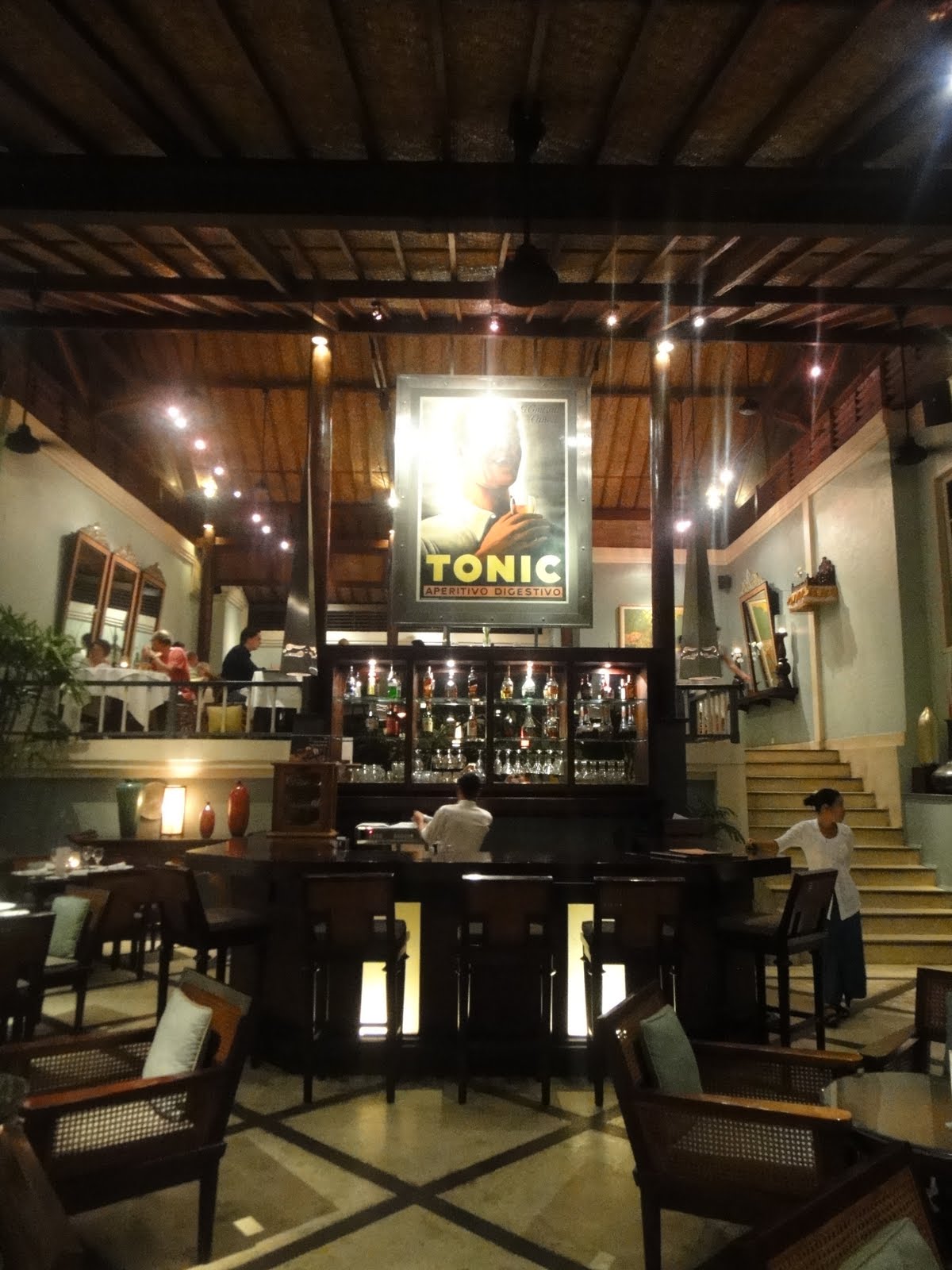
The restaurant scene is international, reflecting the importance that tourism plays in Bali’s culture and economy. Italian, Thai and continental dishes mingle on the menu with chicken satays, spicy fried noodles and fresh grilled local fish. The common element for many restaurants is clearly in the design – the vibe is casual, the restaurants open wide to the balmy air, each with a cool urban decor.

We dine one night at Terazo, and the menu reflects the diverse tastes and sensibilities of the customers.  Me? I have an ice-cold Bintang beer, a refreshing gazpatcho soup and pork belly with cannellini beans. While roast suckling pig is a mainstay in Bali - babi guling - this pork has more of an Italian feel, scented with rosemary and garlic.  I don’t know if it’s typically Balinese but I do know that it’s delicious.


Icy cold local Bintang beer

Chilled gatzpatcho with lemongrass

Slow roasted pork belly with braised cabbage, cannellini beans, in a rosemary roasted garlic jus

A Taste of Bali

Several years ago we took cooking classes at the Four Seasons resort in Jimbaran Bay. This recipe has since become a standard appetiser at our house, especially at our holiday Open House, where a little taste of Bali makes even the coldest December day brighter.

Saté Lilit Bali (Balinese Chicken Sate)
courtesy of Four Seasons Resort at Jimbaran Bay

We are very lucky to live in a city where the exotic ingredients needed here are readily available. I have cited a list of mail order sources for the more obscure ingredients.

1 kg boneless, skinless chicken meat, minced (can use just breast or thighs or a combination of both)
3½ ounces shallots, finely chopped
1½ ounces garlic, finely chopped
4 pieces fresh small red chili, thinly sliced
4 tsp ginger, finely chopped
4 tsp galangal, finely chopped
2 tsp Chinese ginger (grachai), finely chopped


Chinese ginger, photo courtesy of Aromatics International

2 tsp fresh turmeric, finely chopped (or 1 teaspoon ground turmeric)
1 tsp white pepper, ground
2 cloves clove, finely minced
1 tsp nutmeg, ground
1 tsp coriander, ground
1 tsp white sesame seed, ground
Salt and pepper to taste
4 tbsp canola oil
36 pieces lemongrass, cut into 6 inch skewer lengths
2 kaffir lime leaves, finely shredded
2 oz grated coconut, unsweetened

1. Heat oil in a frying pan on low heat and sauté all the spices, except the lime leaf and coconut, until aromatic and cooked through. Remove from heat, cool and blend to a paste.

2. Mix the spice paste with the minced chicken; add lime leaf and coconut. Season with salt and pepper.

3. Take 20 grams of the chicken mixture and work around the lemongrass skewer; repeat with remaining chicken.
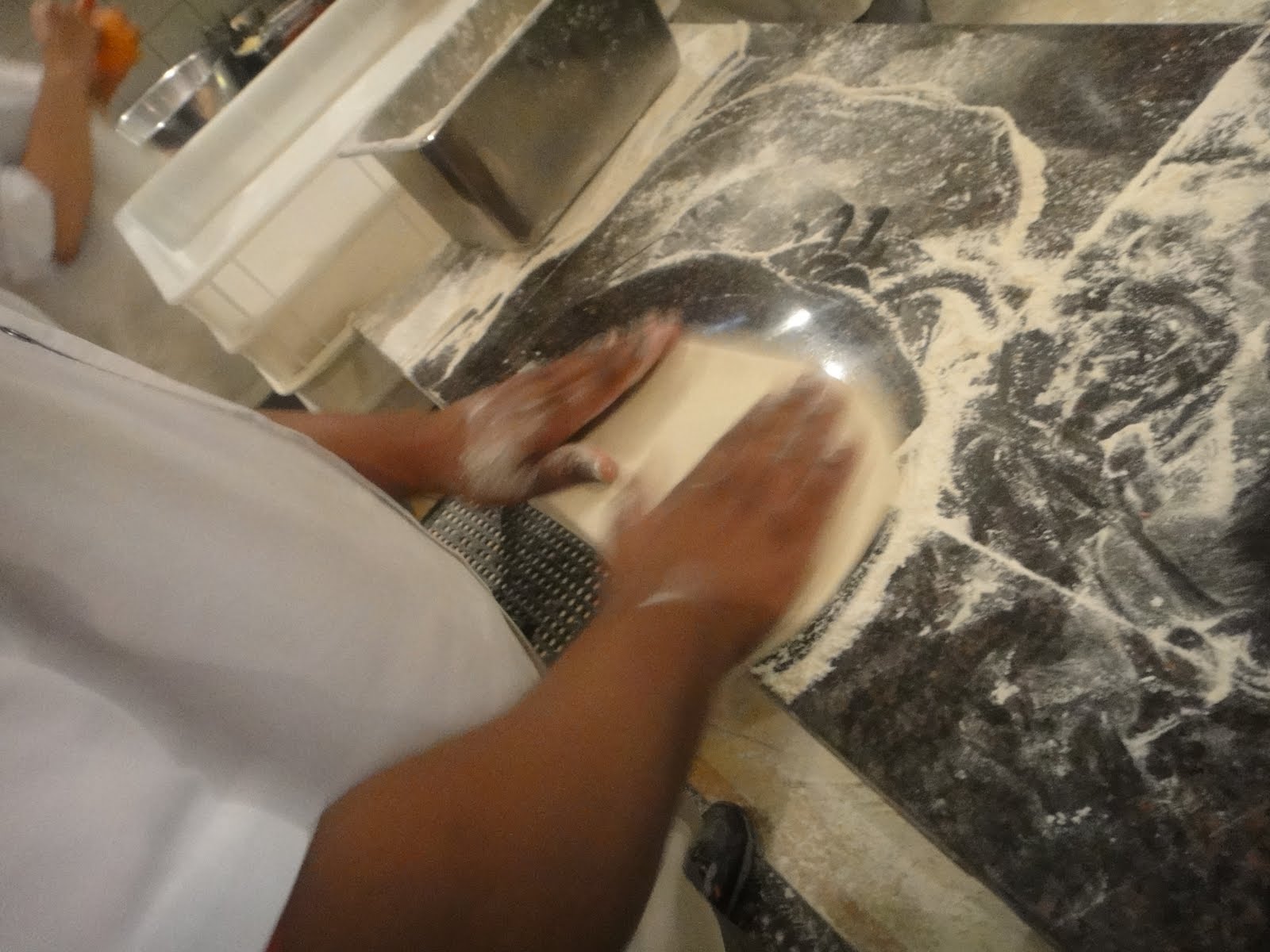
4. Grill the satays until cooked through. Serve with peanut sauce.

Makes 40 satay skewers.

Make ahead: The paste can be made ahead and frozen. The skewers can also be made ahead, grilled and frozen. Or the paste and chicken can be prepared the day before; do not add coconut to raw meat until just before assembly.

I'm also angling to get the recipe for krupuk.  These delicious and highly addictive crackers are served alongside drinks at the Four Seasons resort in Sayan. Watch this space!


The Sights of Bali

Bali is a sensory assault.  Everything is colorful - the amazing terraced rice paddies, the women with their elegant, feminine clothing, the food.  Best of all is the gentle and hospitable nature of the Hindu-practicing Balinese, who prize children, harmony and the earth around them in a way that is spell-binding.

The terraced rice paddies in Bali

Balinese children are considered sacred.  When a baby is born, its feet do not touch the ground for the first three months of life, to preserve the purity of the new soul that has been born to this base earth

Motor scooters are the most popular form of transport. It is common to see a family of three or even four astride a scooter - no helmets of course!

Balinese "dance-drama" features well-known characters from the deities and elaboarte costumes.  These masks are a readily available - and dramatic - souvenir of the island

Beautiful Balinese women gracefully carrying trays full of offerings

Temples everywhere

Cutting coconuts for the fresh coconut water


Even the "Do Not Disturb" sign is beautiful

After a brief and blissful sojourn in Hong Kong to reconnect with Richard before heading home (nothing like a long distance date to keep the marriage fresh!), I wind up my Asian travels, settle back at home and dream of vsisting Bali again some day soon.