December 15, 2010

Baker's Dozen: The Best Cookbooks for Holiday Giving

'Tis the season for giving, and I've been reading a lot of "Top Ten" and "Best of" lists lately.  There’s lots of advice about what to give and get this holiday season.  One list that keeps popping up in various permutations is the "Best Cookbooks of 2010" list.  Seems it's been a bumper year for great cookbooks, and everyone wants to weigh in on their personal favourites.  

I love these lists. I read them to see which books I've missed, which ones I'll give and which I hope that Santa tucks under the tree for me.  But even with stellar lists like this year's, in my mind I go back to my favourites; the tried and true workhorses of my kitchen that never fail to instruct, to surprise and to entertain.

For this Christmas, or for whatever else you may celebrate throughout the year, I'm sharing my personal list of cookbooks you should own.  While you won't find a book on baking in this baker's dozen, I'm sure you'll find something to intrigue.  There's still time to buy one or two as gifts - and be sure to tuck a new old favourite on your shelf too. 

The Best Recipe: Grilling and Barbecue, by the editors of Cook's Illustrated
This book has all the hallmarks of the Cook's Illustrated team: lots of explanation behind each technique and method; "master" recipes for dishes, with numerous variations; instructions for both gas and charcoal, plus loads of recipes for things other than meat and fish.  If you are the kind of cook that wants to know why, and you don't know Cook's Illustrated, pick up a magazine and immerse yourself in their unique blend of science and kitchen alchemy.  And then buy any one of their cookbooks.  I bought this one as a gift for Richard years ago, and the dog-eared pages are a testament to its success.

Friday Night Dinners, Bonnie Stern
The wonderful Jewish tradition of breaking bread with family is one that more of us should adopt; as Bonnie says, Friday night is a perfect time to share a meal with family and friends. I am lucky to count Bonnie as a dear friend and have been even more fortunate to eat with her and her family for many a Friday night dinner.  This is that rare instant classic: every recipe easy, relaxed and unfussy, arranged around menus that can be mixed and matched.  We make Anna's House Salad dressing by the quart, the Rack of Lamb with Harissa is divine and the Sticky Toffee Cake is just delicious.  I was thrilled that Bonnie included two of my recipes in this book too! The newest book on this list, FND was just released in paperback.

Olive Oil: From Tree to Table, Peggy Knickerbocker
A few years ago a colleague brought in a box of cookbooks that she had received from a publisher friend. Ours for the taking.  Anything to do with olive oil seemed like a good bet, and I wasn't wrong.  The front half of this book takes you on a journey of olive oil production, and everything from how to buy it to how to store it.  Many of the accompanying recipes feature different olive oil varietals, and it's fun to try and use what type's asked for (Tuscan, Greek, Spanish).  I've cooked my way through the appetisers and most of the mains, with a couple of breads thrown in too.  Simple, flavourful Mediterranean cooking, beautifully presented. 

Pork and Sons, Stéphane Reynaud
You had me at pork.  Everything to do with the glorious pig, and I mean everything. I grew up with a father who would buy a pig with a few other friends, so that they could butcher it together to make everything from sausages to head cheese (not to mention those lovely pork chops), so nose to tail eating is old hat for me.  This book is for the real pig lover.  Gorgeous photos, wonderful character pieces and - best of all - the most hilarious porcine cartoons in every chapter.  Bien sur, Stéphane Reynaud's restaurant in France is so on my list of places to visit before I die.

Soup - A Way of Life, Barbara Kafka
"Sadly, I cannot invite all of you to my house, but I think there is a full array of recipes here for happiness". So says Barbara Kafka in her lovely introduction to this book full of goodness.  Like a warm hug or toasty slippers on a cold winter's night, a beautiful bowl of soup is truly comfort food.  And, no matter what your skill level in the kitchen, soup is that most forgiving of dishes, accommodating equally scraps of leftover bits and purpose-bought ingredients.  Full of personal stories, this book is like being at Barbara's house - and what a welcoming home it is.

Cooking from an Italian Garden, Paolo Scaravelli and Jon Cohen
For a few brief years in my early 20's, I become a vegetarian, much to my parents' horror (see Pork + Sons above).  At that same time, I was slowly realising what amazing cooks my parents were, and that homemade ravioli, featherweight gnocchi and creamy lasagne were not the usual fare on most people's dinner table.  This book didn't cement my vegetarianism, but it did open my eyes to fresh, local, seasonal that is the mantra of Italian cooking, and that somehow hadn't been impressed upon me even though I lived it every day.  The dishes are rich and full of butter and oil (Ina Garten would love this book), and I still use it for great pesto, crespelle and pasta recipes, 25 years later. 

Julia's Kitchen Wisdom, Julia Child
How to choose just one Julia Child book?  I chose to put Kitchen Wisdom on the list because it's the perfect soupçon of Julia: tips. hints and the absolute best full proof recipes that showcase all of her tried and true favourites.  It's less overwhelming than Mastering but just as good at showcasing her unique voice and firm hand in the kitchen.  A wonderful stocking stuffer; or put it by your bed and dip in every now and again for inspiration.

Barefoot Contessa Back to Basics, Ina Garten
How easy is that? is the Ina mantra, and the name of her new book.  Skip that one and get this instead.  Part recipe book, part entertaining primer, this book follows the Ina formula of easy to read format, great photos, and tons of tips and simple shortcuts along with the delicious recipes.  I love the feature at the beginning of each chapter that showcases 10 easy to do things: 10 no cook appetisers; how to arrange flowers like a pro; 10 things not to serve at a dinner party, etc.  If you have someone who loves to entertain on your list, this is a must-add for their cookbook shelf.

Instant Entertaining, Donna Hay
And this is another.  I could easily add every Donna Hay book and make this list strictly Aussie (and all of her books are on my shelf).  I love that there's a photo for every recipe; I love that there are beautiful and simple ideas for imaginative table settings; I love the menu suggestions and stunning photography. I'm an avid reader of the Donna Hay magazine, and her books follow the same format, making everyone believe that entertaining with style is not only possible, it's practical.   

Bills: Breakfast, Lunch + Dinner, Bill Granger
Another favourite Aussie chef.  You can almost smell the bright clean Sydney air emanating from the pages of this cookbook.  This is especially good for family cooking, and offers up simple recipes for any time of the day.  It's worth seeking out the more exotic ingredients that may not be readily available, like passionfruit, to make the yummy desserts.  Reflecting the proximity of the water, there's lots of seafood dishes as well, and dishes with a Asian twist that are full of flavour. Yum! 

The New Basics, Julee Rosso and Sheila Lukins
Probably the most used book on my shelf.  If I were on a desert island, this would be the one I would take.  There are so many things that make it great: the comprehensive size, covering everything literally from soup to nuts; the copious sources referencing all the great cooks and their books, from Julia to James Beard and Elizabeth David; the engaging voice of the two authors.  It taught us the pleasure of making soup; how to clarify butter and has possibly the world's best apple pie recipe. A delight from cover to cover.

Madhur Jaffrey's Spice Kitchen:, Madjur Jaffrey
I got this little book 20 years ago as part of a gift set that included beautiful little tins of Indian spices, packaged in a wonderfully colourful box. Although I loved Indian food, I had never attempted to make it. Madjur Jaffrey is at once storyteller and teacher, and these recipes, meant to showcase the spices, are both simple and delicious. This book gave me the confidence to try the exotic and unknown, and taught me that spices are truly mysterious, complex and wonderful things.

Contemplation and the Art of Saladmaking, Jeanne Heiberg
This odd and wonderful book rounds out my baker's dozen.  Found in a used bookstore in Chicago, this book is part meditation guide, part story telling and ultimately about salads. Each chapter focuses on one salad recipe, sometimes with variations, with names like Vinegar of Vicussitudes Salad and Eros and Endeavor Salad. Quirky and interesting, this is another one great for bedside reading.

I hope you have a chance to buy and try some of these books. I'd love to know what some of your favourites are too!

December 05, 2010

Guest Blog Post: Jamie Kennedy and the World's Best Paella

Let me start by saying that my first guest blogger is not Jamie Kennedy, as much as I would like to say that he and I are chummy enough to be blogging buddies.  But it was Jamie that inspired me to ask my first guest blogger to post on these pages, none other than the wonderful and talented Mr. Duckandcake, aka my husband Richard.

It started with a dinner that I attended this past Monday night at Gilead Cafe, Jamie's cozy restaurant and staging arena for his catering business.  The restaurant is an intimate space, and the room was jammed, filled with 30+ women there for a private cooking demo and dinner.  On the menu: authentic paella, preceded by some yummy apps and followed by salad and luscious dessert.

I was particularly interested in the paella, because, IMHO, Richard makes a kickass paella.  And I thought I could glean some tips to share back home.  The trappings were certainly impressive.  A HUGE paella pan. Proper Bomba rice.  An array of ingredients, mise en place, at the ready.  And a master chef to pull it all together.


Maybe it was the prevalent memory of Rich's delicious paella that was playing in my mind.  Maybe it was the fact that the rice was a wee bit under-salted.  Maybe it was the way the paella was plated, more restaurant style than rustic country.  All that combined to leave me with the distinct impression that, although the technique was beyond reproach, the end result paled in comparison.  Yup, it's true.

Richard makes the world's best paella.  And without further ado, over to Richard to tell you all about it. 

********
I think Elizabeth will agree with me that nothing brings us joy like hosting wonderful friends in our home while sharing copious amounts of food, stories and laughter.

I enjoy cooking although my culinary skills are limited. But, for some reason, I seem to have mastered a few dishes which never fail to impress. Having grown up in Montreal with the BBQ in use regardless of weather and season, I too barbecue year-round.  On a particularly mild fall evening earlier this year, this dish was la piecè de résistance.

Paella on the barbecue.

As a BBQ purist, I rely on my charcoal Weber to give me the authentic barbecue taste I look for. Of course this recipe can easily be replicated on a gas BBQ. Whether using gas or charcoal you must ensure that the heat source covers the entire bottom of the BBQ in order to give an evenly distributed temperature.

Other than cooking the paella on an open flame, the other key component of this recipe is the broth in which all the ingredients cook. A velvety homemade broth using as its base the discarded shells of shrimps. These can be from shrimps you’ll cook in the actual paella or, as we have started doing, shells that we keep and freeze from shrimp cooked for other dishes. After sweating the shells in a pot and investing time and a handful of aromatic ingredients, you have a perfect base for a perfect paella.

I'm sure there are numerous versions of this famous Spanish dish, some more authentic than others, but I like the version where, like a treasure hunt, everyone can find something to satisfy; chicken, chorizo, shrimp and mussels.

Richard's Paella on the Barbecue
generously serves 8

For the shrimp broth
(adapted from Food and Wine magazine)

2 tbsp olive oil
Shells reserved from 2 lbs medium shrimp
1 lg onion, thinly sliced
2 carrots, thinly sliced
¼ c tomato paste
¼ c dry sherry
2 quarts of water
6 lg garlic cloves, chopped
4 thyme sprigs
2 fresh bay leaves
1 large chipotle chile in adobo
Large pinch of saffron

For the paella
(Richard's own!)

½ c olive oil
2 medium onions, chopped
6 garlic cloves, chopped
4 c medium-grain rice (if you can't find authentic Bomba rice, arborio can be substituted)
8-10 bone-in chicken thighs, with skin
½ lb. cured spicy chorizo, sliced
2 lbs mussels, cleaned and debearded
Any combination of 1-2 c green beans, corn, peppers, tomatoes, etc. 
1-2 lbs medium shrimp, peeled, deveined, with tails on (save the shells for broth)

Make the broth:
1. In a large saucepan, heat the oil.  Add the shells and cook over medium heat until they are lightly browned.  Add the onion and carrot and cook for 5 minutes, or until the onion begins to brown.   Stir in the tomato paste, cook briefly, then add the sherry and bring to a boil for one minute more.


2.  Add the water and bring to a boil.  Stir in the remaining ingredients and simmer over low heat for 25 minutes.


3.  Strain the broth into a saucepan, pressing on solids to extract liquids.  You should have at least 6 cups.  Season with salt, and if proceeding with recipe, cover and keep warm over low heat.  If making ahead, refrigerate for up to one day or freeze for up to one month.


Make the paella:

1. Light the barbecue.  When coals are covered with light ash (or when heated to medium if using gas), place a 16-inch paella pan on the grate.  Pour in olive oil and when it's hot, saute the onion and garlic for a minute or two, being careful not to brown.  Add the rice, stirring for two minutes or so to coat the grains with the oil.

2.  Add the reserved shrimp broth and let simmer for a few minutes so that the rice begins to absorb the liquid.  Add the chicken thighs, tucking under the rice, cover the barbecue and let cook for 10 minutes.

3.  Stir in the chorizo and vegetables, cover again and let simmer for two minutes.  By this time, the rice will have absorbed much of the liquid as it cooks.  Dot the rice with the mussels, pushing them into the rice mixture with your tongs.  Cover and cook a further two minutes, or until the mussels have opened.  Finally, add the shrimp, again pushing the shrimp into the rice, cover a cook until the shrimp are just pink.

4.  Serve tableside from the paella pan, or spoon into a large serving platter, scraping up some of the crusty bits from the bottom of the pan.


Ed. note: It was a wee bit hard to pin Richard down to exact times and amounts.  Like any good cook, he watches his food, improvising as he goes.  That's particularly true of his cooking on the barbecue. Do the same - your paella will be the better for it.

November 25, 2010

Salad Days: Butter Crunch Salad

I know I know – it’s getting cold outside and we’re supposed to be turning to hearty soups and stews in the kitchen. And I love root vegetables – really I do – so the abundance of all those gnarly misshapen potatoes, turnips, parsnips and yams makes me want to whip out the roasting pan and turn up the oven.

But all that hunkering down needs to be balanced, and there’s no better way than with a salad that’s filled with all things green. Really bright and dazzling, with a lemony dressing that highlights every leaf and shimmers. When I want to feel light-filled, and well, light, after too much hibernation food, this salad is what I crave.

Butter Crunch Salad
serves six

For salad:
1 head butter (Boston) lettuce, washed and torn into bite sized pieces
1 fennel bulb, trimmed, cored and sliced
2-3 celery stalks, leaves included, diced
1 Granny Smith apple
1 cup sunflower sprouts
1 ripe avocado (optional)*


For dressing:
2 tbsp Champagne vinegar
2 tbsp Meyer lemon juice, divided
Grated lemon zest from two Meyer lemons (use regular lemons if Meyer isn't available)
1 tbsp honey
1 tbsp grainy mustard
½ tsp salt
Lots of freshly ground black pepper
¼ cup olive oil

*Part of the beauty of this salad is its "super crunch".  To maintain that consistency, skip the avocado.
1. Make dressing first. Whisk to combine vinegar, 1 tbsp lemon juice, lemon zest, honey, mustard, salt and pepper. Slowly add oil until combined. Set aside.


2. In a large bowl combine lettuce, fennel and celery. Halve, core and dice apple and place in a small bowl; toss with remaining lemon juice. Peel and dice avocado and gently toss with apple and juice. Place in bowl with lettuce. Roughly chop the sunflower sprouts and add to the lettuce.

Be sure to include the celery leaves

Tart Granny Smith apples add both crunch and zestiness to the salad

Hydroponic sunflower sprouts - you can't get any fresher

3. Whisk the dressing one last time, pour over the salad, toss gently and enjoy. Your stomach will be happy and you can spring for dessert - or a second helping of roasted potatoes - guilt-free.

November 20, 2010

Fruitful Baking: Delicious Tarte Tatin

I’ve never been much of a baker. It’s the exacting science of it that puts me off. Measuring precisely. Step by step sequences of events that can’t be altered. Cold equipment and room temperature eggs (or is it room temperature equipment and cold eggs?). You see what I mean. I haven’t started yet and already I’m sure I’m going to miss a beat. When it comes to the kitchen, I’m more jazz than classical – more improvisation, less following the score note by note. Give me syncopation over exact execution every time.

But I do love pie. And I do love Julia Child. So when we decided to make a dinner in honour of Julia Child’s birthday last year (inspired by a menu in Bon Appetit magazine), I thought we’d substitute the proposed dessert, Reine de Saba, for something I’d never tried before: the ultimate French dessert, tarte tatin. E voila – a new recipe entered my speed dial repertoire and a baker was born.

Since then I’ve made this tarte tatin many times, and every time it’s delighted me with just how easy baking can be. With fall apples filling the farmers’ market tables and in cold storage, it’s a perfect time to try this one yourself. C’est ci bon!

Julia’s Tarte Tatin
from Julia's Kitchen Wisdom
serves six

Here’s my version of Julia’s pie dough, which can be used for the tarte or for any sweet or savoury pie you wish to make. You will need about half of this recipe for the tarte. If you have a favourite pie dough recipe, by all means use it.  The great thing about dough is that it can be frozen so you can have some at the ready whenever you're in the mood for a sweet treat.  Also be sure to allow enough time for the dough to rest; while some recipes will call for a mere 30 minutes, I like to let the dough rest, as Julia suggests, for a couple of hours.

For the Tarte Tatin:

6-8 Jonagold apples, cored, peeled and halved (any good baking apples will work well here)
The juice and zest of 1 lemon
1½ cups sugar
6 tablespoons unsalted butter
Heavy oveproof 9-inch skillet for cooking and baking
Optional: whipped cream or vanilla ice cream, as accompaniment

1. Preheat the oven to 425°F, with the rack in the lower middle position.

2. Slice the halved apples into 4 lengthwise wedges each, and toss in a large bowl with the lemon juice and zest and ½ cup of the sugar. Drain the apples after macerating 20 minutes.


3. In the skillet, melt the butter over medium-high heat. Stir in the remaining 1 cup sugar and cook until the syrup bubbles and turns golden brown. Remove the pan from the heat and arrange a layer of apple slices in a circular pattern on the caramel in the skillet, then arrange the remaining apples neatly on top.

Everything's better with butter!


4. Return the pan to moderately high heat and cook for about 25 minutes, covering the pan after 10 minutes. Every few minutes press down on the apples and baste them with the juices. When the juices are thick and syrupy, remove the pan from the heat.  Watch and smell at this step - because of the high amount of sugar, your syrup can go from thick and buttery to burnt in seconds.

5. On a lightly floured surface, roll the chilled dough into a circle, ⅛-inch thick and 1-inch larger than the top of the pan. Drape the dough over the apples, pressing the edge of the dough between the apples and the inside of the pan. Cut 4 small steam holes on the top of the dough. Bake until the pastry has browned and crisped, about 20 minutes.


6. Let the tarte rest for 10 minutes. Here’s the tricky part! Unmold the tart onto a serving dish (so the pastry is on the bottom). I haven’t quite mastered this to be honest. Rich bought me an Emile Henri tarte tatin baking dish that I’ve tried out once, with only slightly better success. This is a case where practice makes perfect, and I am very happy to keep practicing!  Serve warm or cold with whipped cream or vanilla ice cream, as desired.

A bit messy but no one will mind

Bon appétit!

October 31, 2010

Preserving Flavour in a Jar: Fig Lemon Thyme Confiture

Well, shoot.  It was only after I posted my adventures in canning - namely making plum jam and Italian tomato sauce - that I read the deets on September's Daring Cooks' Challenge.  Yep.  We were asked to learn about food preservation and can or freeze something.  I felt sufficiently proficient to tackle something other than the apple butter or bruschetta in a jar that was suggested...and after reading this recipe on Mrs. Wheelbarrow's Kitchen, this was a must do.  And even though September is feeling very far away, I wanted to post the results.

The September 2010 Daring Cooks’ challenge was hosted by John of Eat4Fun. John chose to challenge The Daring Cooks to learn about food preservation, and challenged everyone to make a recipe and preserve it by either canning or freezing it. John’s source for food preservation information was from The National Center for Home Food Preservation.

Fig Lemon Thyme Confiture
from Mrs. Wheelbarrow's Kitchen
updated September 2013
 
4 lbs. fresh figs
1 lemon
½ c honey
Scant 3 c sugar
3 to 4 sprigs of thyme, tied together in a small piece of cheesecloth (optional)*

1.  Pour boiling water over the figs, allow to stand for 10 minutes and then drain. Quarter the figs, then place them in a large non-reactive pan.  I love my sturdy and pretty #26 Le Creuset pot.


2.  Wash the lemon well and slice very thin with a mandoline or a sharp knife, and then cut into quarter slices.*  Remove the seeds. Add the lemons, honey, sugar and thyme to the figs.


3.  Bring the mixture to a simmer, stirring to dissolve the sugar. Take off of the heat, cool slightly, cover and refrigerate at least 8 hours or overnight to develop the flavors.


4.  When you're ready to can, remove the thyme and bring the jam to a full rolling boil, and boil vigorously for five minutes, stirring constantly to avoid burning the jam.  For a thicker jam, add one packet of liquid pectin before bringing to a boil.

5.  Pour hot jam into hot sterilized jars and process for 10 minutes in a boiling water bath.


This gorgeous jam is the perfect accompaniment for a lovely cheese course, an unusual condiment for a grilled cheese sandwich, roast chicken or just spread over a piece of thick and crusty baguette, made all the more decadent with a slather of butter.


*The first time I made this I left the lemon slices whole, and did not use the pectin.  I found the resulting jam too "chunky" for my liking, but also not "jammy" enough.  Also be careful with how much thyme you use.  The flavour can be overwhelming for the delicate figs.

October 26, 2010

Comfort Food: Eliz's Roast Chicken


Sure there’s fancy. I have stacks of old Gourmet magazines in the basement, filled with recipes two pages long, multi-day complex affairs that somehow never quite live up to all their promise. It used to be that I’d seek out the especially long ones, seeing a virtue in surviving a marathon of cooking, struggling to get everything to the table at once and hot.

And while those moments of total immersion in a new recipe, technique or process still beckon (tomato sauce anyone?), there’s something deeply satisfying about simple. A chicken. A lemon. Some fresh herbs. Garlic. Olive oil.


Roast chicken really is a most magical dish.

Eliz’s Roast Chicken
serves two greedy people, or four moderately hungry ones.

Perfect every time, this is my go-to meal for after work, Friday night dinner with friends, or a lazy Sunday lunch. Add a salad, good crusty bread and a bottle of wine or whatever else appeals to your rumbling stomach.

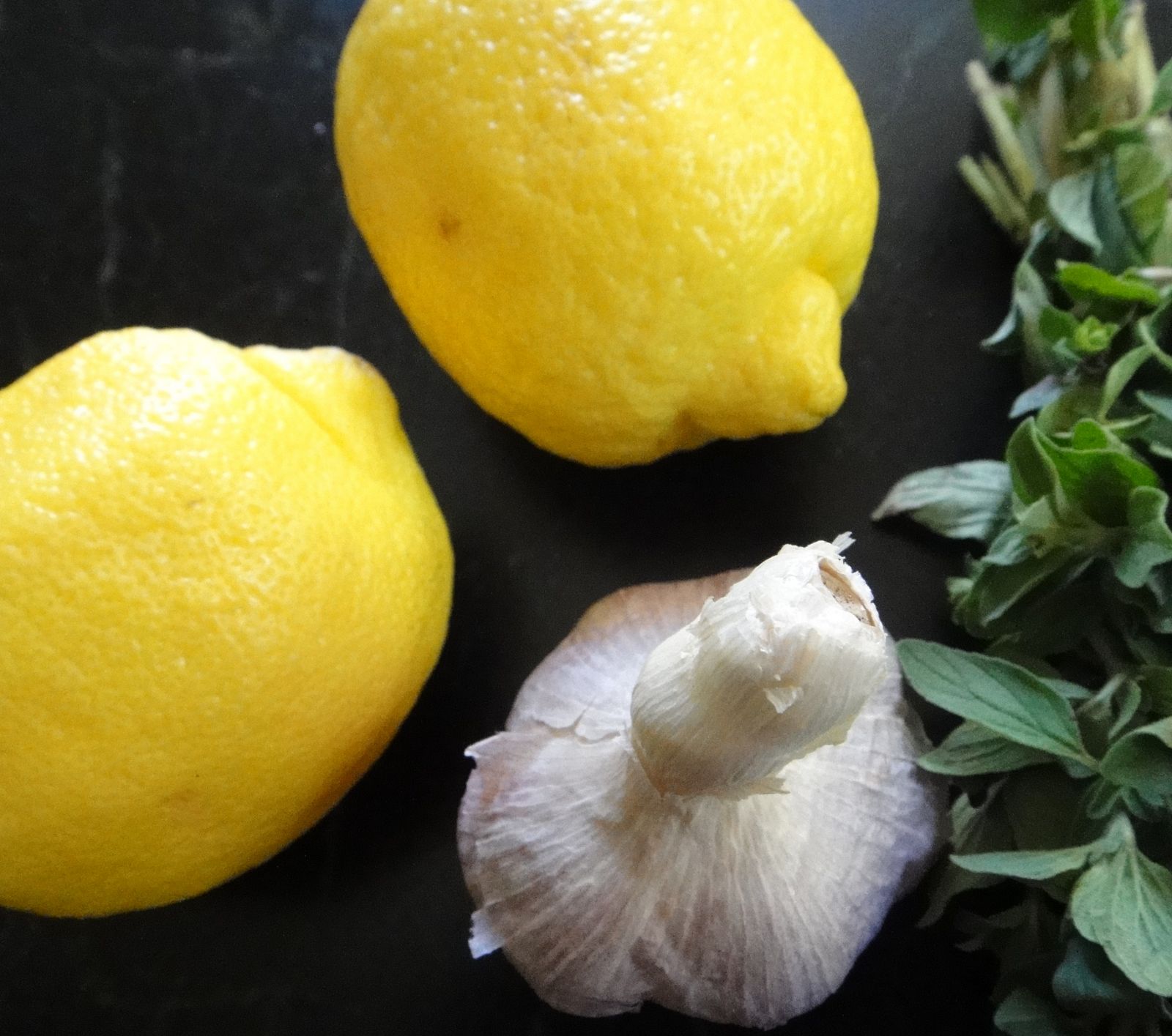
1 4½ - 5 lb organic whole roasting chicken
1 lemon
2 large garlic cloves
1 bunch fresh marjoram
Salt and freshly ground pepper

1. Preheat the oven to 425°F.

2. Rinse chicken inside and out and dry well with a tea towel.

3. Generously sprinkle the inner cavity with salt and pepper. I like to use finely ground seasoned sea salt from France.

4. Quarter the lemon, chop the unpeeled garlic cloves in half and roughly chop a generous portion of marjoram. Stuff as much as will fit into the chicken, starting with a piece of lemon, tucking in a few sprigs of marjoram, adding garlic liberally, until you have used as much of the flavourings as possible. Pour a tbsp of olive oil into the cavity.


5. Using kitchen twine, truss and tie the chicken. Rub the outside with olive oil, season with salt and pepper and place in a roasting pan with rack.  I have recently used my Le Creuset casserole very successfully, using rolled aluminum foil to create a makeshift rack.

6. Place the chicken the chicken in the oven, uncovered, breast side up, and roast for 1 to 1 ½ hours (the general rule of thumb is to cook chicken for 20 minutes per pound), until juices run clear when the thigh is pierced. If you’re using a thermometer, the internal temperature should be about 165°F.*

7. Let the chicken rest for a few minutes so that the juices settle. Cut into pieces and put on a serving platter, squeezing the lemons that were in the chicken over the pieces. Alternatively, you can deglaze the roasting pan with the lemon juice and some white wine, and reduce the juices to a lemony sauce.


*Full disclosure: I have a Turbo Chef, so that beautiful bird is fully cooked and ready in less than 30 minutes. For those of you with high speed ovens, follow the directions. Many roast chicken recipes suggest an initial cooking for 15 minutes at 425°F, and then reducing the heat for the rest of the cooking cycle. Experiment! It's so easy and worth the time and minimal effort to get oh-so-juicy chicken.


October 23, 2010

Cheers to the Weekend: The Marlatini

The birthday girl at a recent visit to Sketch

It’s the weekend, and it’s time for bottoms up! This deliciously fruity drink was concocted by my niece Marla, and in honour of her birthday today, we’re raising a glass to toast her. Cheers, Marla, and many, many more.

The Marlatini
makes one very generous drink, or two to share

1 oz Cointreau
1 oz Chambord
1 oz Limoncello
(if you adjust these amounts to make one drink, do so in equal measure; eg ½ oz each Cointreau, Chambord and Limoncello)

3 oz cranberry juice
3 oz orange juice
(if you adjust these amounts make one drink, do so in equal measure; eg 2 oz each cranberry and orange juice)

Optional
2 oz club soda

Pour all ingredients into a cocktail shaker filled with ice. Shake well and strain into a large martini glass. Serve with a twist of lemon or orange.

I love this all-in-one shaker that allows me to measure and shake easily

Shake it baby, shake it!

If you're using the original portions, be sure you have a big martini glass!

Bottoms up!